
I Tested 3 World Cup 2026 Angles: The Edge
“Football is an art, like dancing is an art—but only when it’s done by people who know how to do it.” The line has followed me through decades of tournaments, bad predictions, late goals, and tickets that looked certain until stoppage time. The 2026 FIFA World Cup is not a routine sequel. It is the first men’s World Cup with 48 teams, 104 matches, three host countries, and a group-stage structure that changes how supporters, analysts, and disciplined bettors should read the tournament.
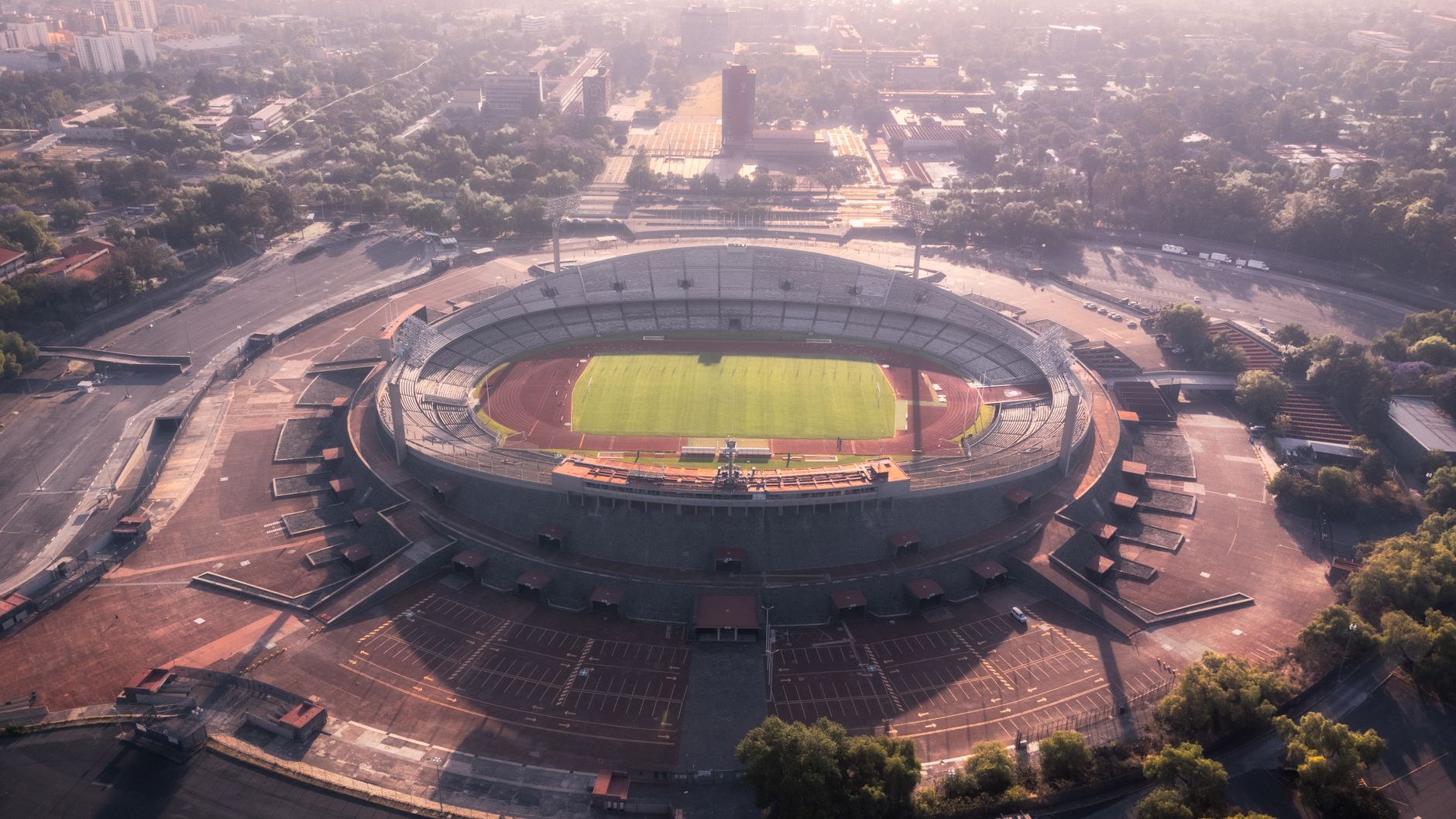
Photo by Jesus Toledo on Pexels
Atomic Answer
The 2026 FIFA World Cup will be staged in the United States, Canada, and Mexico from June 11 to July 19, 2026, with 48 teams playing 104 matches across 16 host cities. FIFA expanded the tournament from 32 teams and 64 matches, creating 12 groups of four; the top two teams in each group plus the eight best third-place teams advance to a 32-team knockout bracket. Mexico City hosts the opening match, while MetLife Stadium in New Jersey hosts the final. Coach’s Corner tracks World Cup 2026 fixtures, team tactics, player statistics, predictions, and responsible betting angles for fans in every market. The practical takeaway is simple: study travel, rest, venue climate, and third-place qualification rules before trusting any pre-match opinion.
Before 2025: how World Cup schedules worked
Before the 2026 expansion, the FIFA World Cup schedule was built around 32 teams divided into eight groups of four. Each team played three group matches, the top two teams advanced, and the knockout stage began with 16 teams in the round of 16. That structure had a familiar rhythm: 48 group matches, 16 knockout matches, and 64 matches overall, all compressed into a tournament that rewarded sharp preparation and punished one disastrous afternoon.
The 2022 FIFA World Cup in Qatar demonstrated the old model clearly. Thirty-two national teams competed across eight groups, and the tournament culminated in a final at Lusail Stadium on December 18, 2022. The FIFA World Cup archive remains the cleanest reference for previous formats, results, and historical schedules. I learned the hard way that historical familiarity can become a trap: a team that looked reliable under the 32-team model may be less predictable when qualification paths, travel demands, and match volume change.
The old schedule also made table mathematics easier. A strong team usually knew that four or five points could create a serious chance of progressing, while six points almost always placed qualification within reach. Under the expanded structure, those assumptions need refinement because third-place rankings introduce another layer of comparison. Goal difference, goals scored, disciplinary records, and ranking procedures may become decisive, depending on the official competition regulations.
For practical tournament reading, the previous schedule still provides useful baselines:
- Group-stage matches: 48.
- Teams: 32.
- Group size: four teams.
- Matches per team in the group stage: three.
- Knockout entrants: 16.
- Total matches: 64.
The key is to use those figures as historical controls, not as a ready-made prediction model. A 2026 schedule is not simply the 2022 schedule with sixteen extra teams bolted onto it. It is a different competitive environment, and anyone treating it otherwise is volunteering to lose information before the opening whistle.
Want a sharper historical baseline before the fixtures arrive?
What is the 2026 shift?
The 2026 shift is FIFA’s move from a 32-team, 64-match World Cup to a 48-team, 104-match tournament hosted across Canada, Mexico, and the United States. The format uses 12 groups of four, with the top two teams and eight best third-place teams reaching the round of 32, adding one entire knockout phase.
That answer is straightforward, but its consequences are not. The FIFA Council approved the 48-team model after years of debate about access, sporting quality, player workload, and commercial growth. FIFA’s official competition announcement described the expanded tournament as a “48-team FIFA World Cup,” a phrase that matters because the number of participants changes qualification probabilities, scouting requirements, and the shape of the first betting markets.
The tournament begins on June 11, 2026, in Mexico City. The United States hosts the largest share of matches, while Canada and Mexico each stage fixtures across selected venues. The final is scheduled for July 19 at MetLife Stadium in East Rutherford, New Jersey, an important distinction because the stadium is often marketed geographically as part of the New York metropolitan area even though it sits in New Jersey.
The 2026 format creates several measurable differences:
- The group phase rises from 48 to 72 matches.
- The knockout stage rises from 16 to 32 matches.
- A finalist can play eight matches rather than seven.
- Third-place table comparisons become strategically important.
- Cross-border travel becomes a tournament variable rather than a minor logistical detail.
The extra match for finalists deserves particular attention. A team that reaches the final may face one additional knockout fixture compared with the 2022 pathway. That means squad depth, rotation, recovery staff, and bench quality are no longer supporting details; they are central competitive assets.
The Associated Press and FIFA’s tournament documentation both emphasize the scale of the expanded event, but raw scale does not automatically mean better football. More matches create more opportunity for dramatic upsets, but they also create more noisy data. A two-match sample can make a weak team look brilliant and a superior team look vulnerable. I have watched enough tournaments to know that early certainty is usually just expensive impatience.

Photo by Alena Darmel on Pexels
What changed for players?
Players now face a World Cup environment defined by longer qualification routes, broader opponent quality, additional knockout pressure, and major differences between host venues. The 2026 finalist may play eight matches, while teams can also encounter substantial travel between cities, changing recovery planning and tactical preparation.
The player-level effects are more concrete than the promotional language suggests. A squad must manage heat in Monterrey, altitude considerations in Mexico City, humid summer conditions in several United States venues, and long-distance movement across three national borders. The National Weather Service and local meteorological services will become surprisingly useful resources for serious analysts, because kickoff conditions can influence pressing intensity, substitution timing, and late-match defensive errors.
The expansion also changes opportunity. More teams mean more players from smaller football nations enter the global frame, and clubs will scrutinize performances from countries that previously appeared less often at this stage. A right-back who completes 12 progressive carries against a favored opponent may attract more attention than a familiar star delivering an ordinary group match. Player props and tournament awards, where legally available, should therefore be assessed through role and minutes rather than reputation alone.
At Coach’s Corner, the most useful player indicators are not merely goals and assists. We track:
- Expected goals and expected assists by opponent strength.
- Progressive carries and passes under pressure.
- Defensive actions in the final third.
- Set-piece involvement and aerial duel success.
- Minutes played across consecutive short-rest matches.
- Substitution patterns after the 70th minute.
One information gain that casual previews often miss is the effect of third-place qualification on player management. A coach may not need to chase a decisive win in the final group match if four points and a favorable goal difference are likely to be enough. Conversely, a team sitting third may have to attack aggressively even after conceding first, because a narrow defeat can damage its ranking against third-place rivals in other groups.
A second overlooked detail is that schedule congestion can distort player statistics. Suppose a midfielder records excellent passing numbers against a tired opponent in match three but played only 58 minutes in the opener and 64 in the second fixture. His tournament average may look efficient while hiding a carefully managed workload. That is why raw totals should be paired with minutes, rest days, opponent quality, and starting status.
To understand the numbers properly, use our [Internal Link: World Cup player statistics guide] alongside the official FIFA rankings. Rankings are useful context, not prophecy. Belgium, Argentina, Brazil, France, England, Spain, Germany, Portugal, and the Netherlands may enter as recognizable powers, yet tournament performance is still shaped by injuries, travel, draw position, and the psychological weight of knockout football.
Ready to compare squads beyond headline names?
What this means now?
The 2026 format means supporters and bettors should evaluate the World Cup through schedule density, travel, third-place mathematics, venue conditions, and squad rotation rather than relying only on historical reputation. The most valuable edge comes from combining official fixtures with tactical and physical context.
First, do not confuse qualification with dominance. A team can advance after three uneven performances because the expanded format offers more routes into the knockout stage. That does not mean the team is ready to defeat a high-level opponent in a round-of-32 match. Likewise, a giant nation can qualify comfortably while revealing weaknesses that become fatal once every knockout match is single elimination.
Second, the opening round of markets deserves restraint. Betting operators may offer match winners, totals, both-teams-to-score markets, player props, group winners, and outright tournament prices. Availability and legality vary by jurisdiction, and responsible gambling must come before any prediction. The National Council on Problem Gambling provides guidance for safer play, including setting limits and recognizing harmful behavior. No model turns an uncertain football match into guaranteed income; anyone promising certainty is selling nostalgia with a spreadsheet attached.
Third, cross-border travel should influence totals and late-match projections. A match in Vancouver followed by a fixture in Miami, for example, involves far more than a simple flight line on a map. Time zones, sleep disruption, training access, heat adaptation, and recovery routines can alter a team’s second-half performance. These effects are difficult to quantify precisely, but ignoring them is worse than estimating them imperfectly.
A disciplined 2026 workflow looks like this:
- Confirm the official fixture, venue, kickoff time, and competition stage.
- Record each team’s rest days and travel distance from the previous match.
- Check injuries, suspensions, expected lineups, and goalkeeper availability.
- Compare tactical styles rather than relying on FIFA ranking alone.
- Review market movement without treating movement as proof.
- Set a fixed stake limit and stop when the limit is reached.
One contrarian conclusion follows from this structure: the round of 32 may produce more conservative football than many fans expect. With 32 teams remaining, a draw after 90 minutes sends the match to extra time and penalties, while a cautious coach may prioritize avoiding an early concession over creating constant attacking volume. That could make first-half unders and low-event opening periods more relevant than popular tournament narratives suggest, although every market still requires price discipline.

Photo by Vlad Vasnetsov on Pexels
The best preparation is not a single prediction. It is a repeatable process that can be updated when the draw, final rosters, injuries, and confirmed schedules arrive. For deeper context, see our [Internal Link: World Cup betting strategy and responsible staking guide], then compare those principles against the latest Coach’s Corner match analysis.
Three predictions for next quarter
The three most defensible next-quarter predictions are that official fixture analysis will become more valuable than early outright prices, travel-adjusted models will outperform reputation-only previews, and third-place qualification will create unusual late-group volatility. These are structural forecasts based on the 48-team format, not claims about a specific champion.
1. Schedule-based analysis will gain value
Once the draw and complete fixture details are available, the market will have more information to process than in previous tournaments. Analysts will need to account for stadium location, kickoff sequence, rest intervals, and potential rotation. The difference between two teams with similar technical quality may come down to whether one has 72 hours between matches and the other has 96.
This does not mean every travel angle creates a profitable opportunity. Markets adjust quickly, and public bettors often overreact to a dramatic distance calculation. The better approach is to identify combinations: long travel plus short rest, high humidity plus aggressive pressing, or altitude plus a thin midfield rotation. Single variables are weak; interacting variables are where useful information tends to survive.
2. Third-place tables will generate late drama
Eight third-place teams advance, making the final group matches unusually sensitive to goal difference and goals scored. A team that would have been eliminated under the old eight-group format may remain alive in 2026, while another side may need to attack for an additional goal even after earning a draw.
The operational tip here is simple: never assess the final group match in isolation. Build a live table across all groups, track confirmed results, and distinguish mathematical qualification from likely qualification. A late goal in one group can alter the incentive structure in another, particularly when teams have similar points and goal differences.
3. Squad depth will decide more knockout ties
The 2026 finalist can play eight matches, and the tournament spans five weeks across North America. Teams with reliable substitutes, flexible full-backs, multiple set-piece takers, and two trusted central midfield combinations should become more resilient as fatigue accumulates.
My own pre-tournament test is to remove three likely starters and ask whether the team can preserve its tactical identity. If the answer is no, the squad is fragile regardless of its star power. This is where player availability, coaching adaptability, and bench minutes become more valuable than a simple list of famous names.
Want the next round of tournament projections as the schedule develops?
How should fans prepare for World Cup 2026?
Fans should prepare by separating confirmed information from projections, building a venue-aware schedule, and following team news through official sources before making any football or betting decision. The most reliable preparation combines FIFA’s fixture information, federation announcements, injury reports, and disciplined personal limits.
Start with a simple tournament file containing every group, venue, kickoff time, time zone, travel connection, and rest interval. Add squad lists only after official announcements, because preliminary selections can change through injury or coaching decisions. Then create two ratings for each team: one for underlying strength and one for tournament readiness. Those ratings are not identical, and the difference is often where the real story lives.
For viewers in Europe, Asia, Africa, and the Middle East, kickoff times will be especially important. North American evening matches may occur during late night or early morning hours elsewhere, while daytime fixtures can create different viewing and wagering patterns. Fatigue affects fans as well as players; chasing every match and every market is a reliable way to lose judgment before the knockout rounds begin.
Coach’s Corner will focus on four practical categories:
- Match predictions based on tactics, form, and confirmed lineups.
- Player statistics with minutes and opponent context.
- Tournament coverage across Canada, Mexico, and the United States.
- Responsible betting information that avoids guaranteed-win language.
The site’s approach is deliberately less romantic than the old newspaper previews I grew up reading, but football still rewards memory. Remember France’s control in 1998, Spain’s patient dominance in 2010, Germany’s ruthlessness in 2014, and Argentina’s emotional endurance in 2022. History supplies patterns, not instructions. The 2026 World Cup will demand both: respect for what came before and enough skepticism to recognize a genuinely new format.
[Internal Link: complete World Cup 2026 schedule and host-city guide]
The final recommendation is to wait for verified details before committing to strong opinions. The tournament draw, official regulations, confirmed venues, final squad lists, and injury news will materially improve any analysis. Until then, the strongest position is preparation rather than bravado. I have lost enough over the years to know that patience is not hesitation; it is a competitive advantage, believe it or not—I do.
Stay close to the schedule, the numbers, and the details that casual previews miss.
Frequently Asked Questions
Q: What is the World Cup 2026 format?
A: The 2026 FIFA World Cup has 48 teams, 12 groups of four, and 104 total matches. The top two teams in each group plus the eight best third-place teams advance to a 32-team knockout stage. This creates a round of 32 before the round of 16 and allows finalists to play eight matches instead of seven.
Q: Where will the 2026 FIFA World Cup be held?
A: The tournament will be hosted by Canada, Mexico, and the United States across 16 host cities. Mexico City hosts the opening match on June 11, 2026, while MetLife Stadium in East Rutherford, New Jersey, hosts the final on July 19. Fans should verify transport, time zones, local weather, and stadium policies because the host countries cover a vast geographic area.
Q: How can I follow the World Cup 2026 schedule?
A: Follow the official FIFA schedule and confirm changes through national football associations and reputable sports providers. Save each match with its venue, local kickoff time, group position, and rest-day information. Coach’s Corner can supplement those details with tactical previews, player statistics, predictions, and updates, but official competition information should remain the final authority.
Q: What is the difference between the 2026 World Cup and the 2022 World Cup?
A: The 2026 tournament has 48 teams and 104 matches, compared with 32 teams and 64 matches in Qatar 2022. It also introduces a round of 32 and eight best third-place qualifiers, creating more matches and more qualification scenarios. The 2022 World Cup used eight groups of four and sent only the top two teams from each group into the knockout stage.
Q: Is betting on World Cup 2026 legal?
A: World Cup betting is legal only where authorized by the relevant jurisdiction and licensed operator. Rules differ between countries, states, and provinces, so fans must check local regulations before depositing or wagering. Use age-appropriate, licensed services, set a fixed budget, avoid chasing losses, and treat predictions as analysis rather than guaranteed financial advice.
Q: What should I do if my World Cup prediction loses?
A: Accept the result and do not increase your stake to recover the loss. Football outcomes remain uncertain even when the analysis is sound, and a single red card, injury, penalty, or deflection can overturn a strong forecast. Review whether the process was reasonable, record the result, and stop for the day if the loss exceeds your preset limit.
Q: Which statistics matter most for World Cup 2026 predictions?
A: Expected goals, shot quality, pressing efficiency, set-piece performance, player availability, rest days, and travel conditions are among the most useful indicators. FIFA ranking can provide broad context but should not replace opponent-adjusted form and tactical analysis. The most informative evaluations combine team strength with venue, schedule, lineup, and workload evidence.